¶ Dayton Live Access Team
The Dayton Live Access Team is a group of volunteers and staff that are trained to provide assistance to patrons with any kind of accessibility need during performances at our venues. They provide proactive support by offering assistance before patrons have to seek it out. During events, Access Team members can be identified by their vest (grey with white wheelchair symbol). Pre-show, they are stationed at all entrances to provide curb-to-seat assistance, whether that be pushing a transport chair, offering a supportive arm, or simply answering questions. After any holds at the top of the show, they will transition into the theatre lobby to assist patrons during intermission and post-show.
¶ Transport Wheelchairs
¶ What are transport chairs?
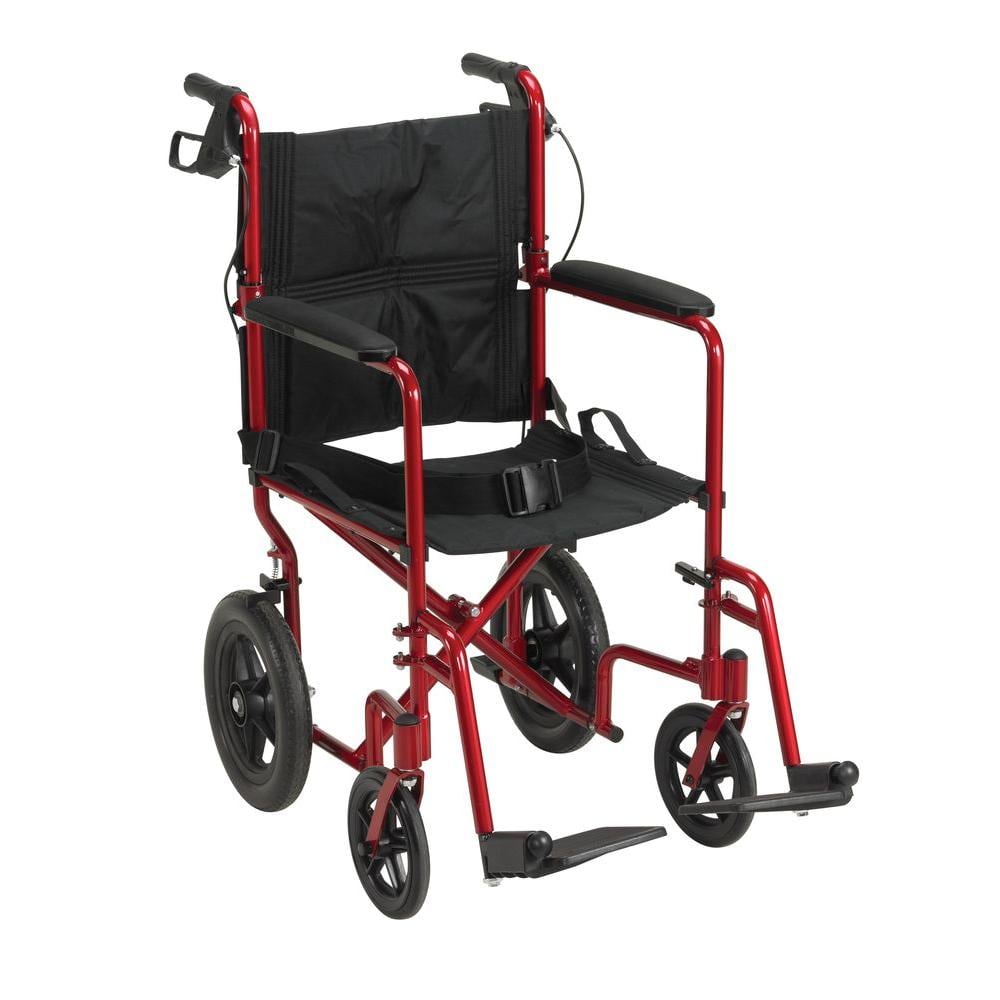
Transport chairs are foldable wheelchairs with smaller wheels that can be used to help transport patrons to different parts of the venue. Patrons cannot roll themselves on these chairs as they do not have wheels you can grab onto.
¶ Can they be reserved ahead of time?
No, patrons cannot reserve use of transport wheelchairs ahead of time. We can let patrons know that we offer them, and that they can request them from a volunteer or house manager when they arrive to the show. If they see an Access Team member wearing a grey vest with the wheelchair symbol on it, they can ask that volunteer for assistance as they are trained to use the transport wheelchairs.
¶ Transport wheelchairs at Dayton Live
We have standard transport chairs and a wider transport chair option. An Access Team member, security team member, or house manager can transport someone where they need to go. If they have a companion with them, the companion can also transport them.

¶ Assistive Listening Devices (ALDs)
¶ What is an ALD?
A device that captures a sound source (like an actor's voice) and broadcasts it directly to the listener's ear through a wearable device, amplifying the “target” sound while filtering out background noise and echo.
¶ Who uses it?
Individuals with hearing loss, including those who use hearing aids or cochlear implants.
¶ ALDs at Dayton Live
We use an infrared (light) system. The black dial must be facing the stage to pick up signal with nothing blocking it (no scarves, jackets, programs, etc.). Patrons should remove their hearing aids (if applicable) when using this device as the headset is in-ear. We are working on updating this system to be compatible with Auracast, which will allow patrons to connect to the feed via Bluetooth on their own personal earbuds/hearing aids/etc.

¶ American Sign Language (ASL) Interpretation
¶ What is ASL Interpretation?
The real-time translation of spoken language into ASL (and vice-versa) by a professional interpreter. ASL is a complete language with its own grammar and syntax, distinct from English. Interpreters use hand signs, as well as facial expressions and body movements, to convey meaning, tone, and emotional nuance.
¶ Who uses it?
Individuals who are Deaf or Hard of Hearing, and communicate primarily through ASL.
¶ ASL Interpretation at Dayton Live
Interpreters typically stand on stage right/house left, so it is best for patrons to sit in the house left section, mid-way back in order to see the performance and the interpreter at the same time. This service is always offered for Broadway shows during the Saturday matinee and is available for other performances in our venues by request.
¶ Audio Description (AD)
¶ What is Audio Description?
A secondary audio track (or live person) that provides verbal narration of key visual elements, such as actions, facial expressions, scene changes, costumes, and on-stage text. The narration is woven into natural pauses in dialogue or songs, so it doesn't overlap with the main story.
¶ Who uses it?
Individuals who are blind or have low vision.
¶ Audio Description at Dayton Live
This service is always offered for Broadway shows during the Saturday matinee and is available for other performances in our venues by request.
For large shows with lots of visual elements, Gayle begins her talks about 15 minutes before curtain. During this time, she discusses the set, costumes, and plot of the show.
Once the show begins, she will actively discuss who is speaking/singing, and mention set updates, etc. Gayle will try her best to only speak when the actors are not speaking or singing, but this cannot always happen.
The patron should plan on meeting Gayle at the guest services kiosk prior to that 15 min mark. She transitions to the booth around 20 minutes to curtain. After she is gone, the volunteer just gives them the device and there is less guidance.
